I’m Officially Tired of Being the "Human" in "Human Error"
We’ve all seen the headlines. Another massive source code leak. Another CISO quoting "tightening internal protocols." It’s a rigged game. Here is why discipline doesn't scale in AppSec.
I’m officially tired of being the "human" in "human error."
We’ve all seen the headlines lately. Another massive source code leak. Another CISO giving a quote about "tightening internal protocols." Another round of mandatory security training that basically boils down to: "Please be more perfect."
It’s a rigged game.
Management hands us LLM-assisted coding tools that churn out hundreds of lines of code in seconds. They set deadlines that were due yesterday. Then, they act shocked when a hardcoded token or a sensitive API key slips through the cracks and into the repo.
If you give a developer a Formula 1 car and tell them to drive 200mph through a school zone, you don’t blame the driver when things get messy. You blame the infrastructure.
That’s why I finally stopped apologizing and started using Puaro.
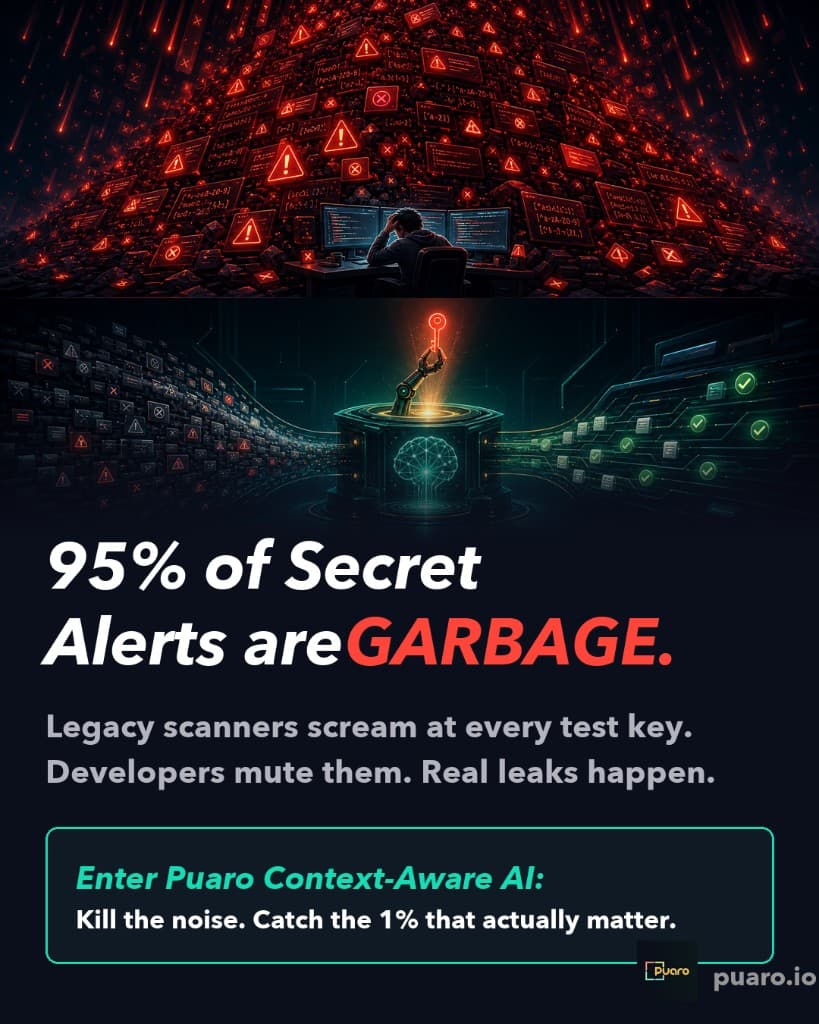
Most security tools are just "shout-ware." They wait until you’ve already messed up and then scream at you in the CI/CD pipeline, or worse, create a mountain of false positives that you have to manually sift through. It’s just more noise in an already loud day.
Puaro feels like it was built by someone who has sat in the chair.
It catches secrets sprawl in real-time, specifically those weird, hallucinated credentials that AI assistants love to "helpfully" suggest.
It integrates into the workflow, blocking the leak before it ever leaves my machine.
It handles the entropy checks and pattern matching in the background so I can focus on the logic, not on whether I accidentally committed a .env file.
We need to stop pretending that "more discipline" is the solution to source code leakage. Discipline doesn't scale when LLMs are generating code faster than any human can peer-review for security vulnerabilities.
If your security strategy relies on your devs never having a bad day, your strategy is broken. I’m done being the scapegoat for a systemic problem. I’m just going to use a tool that has my back.